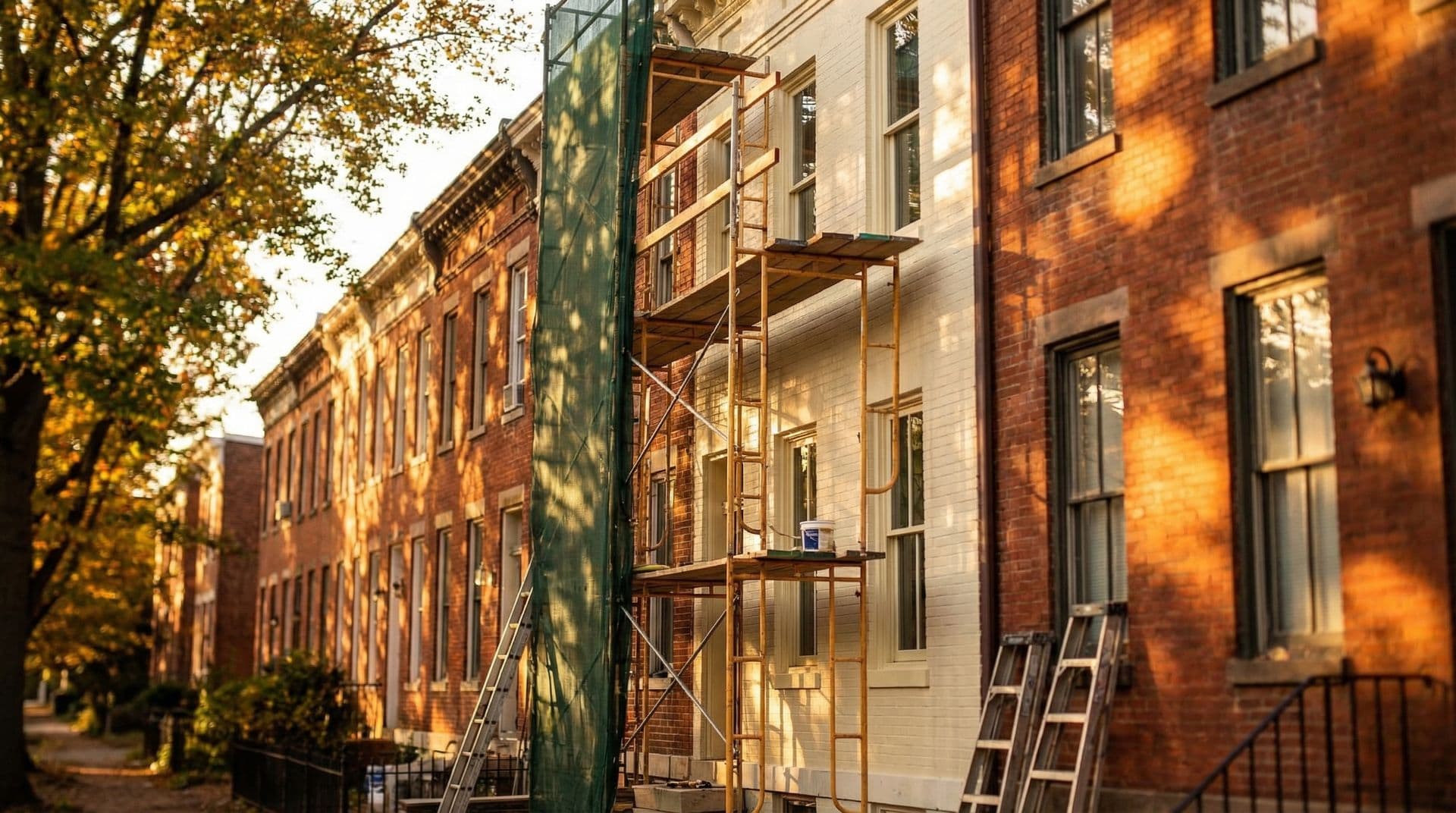
The BRRR Strategy: A Richmond Investor's Playbook
A step-by-step breakdown of the Buy, Rehab, Rent, Refinance, Repeat strategy applied to Richmond VA neighborhoods including Church Hill, Manchester, and Scott's Addition.
Why BRRR Works in Richmond
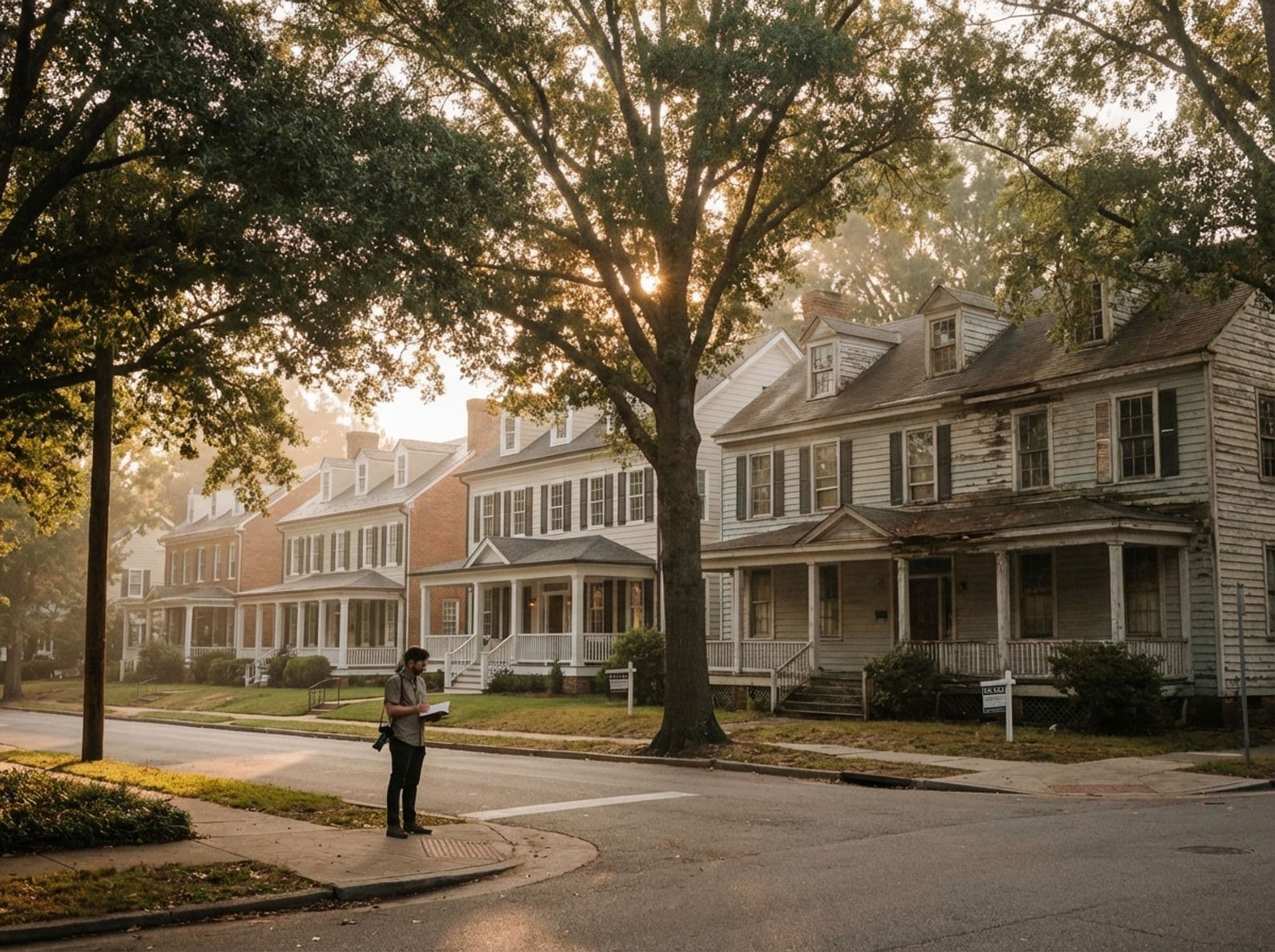
Richmond's real estate market sits in a rare sweet spot for the BRRR strategy. Median home prices remain well below the national average while rental demand continues to climb, driven by VCU's expanding student body, military personnel rotating through Fort Gregg-Adams, and a steady influx of young professionals relocating from Northern Virginia and DC. That gap between acquisition cost and rental income is where BRRR investors thrive.
The city's historic housing stock is a double-edged sword — older homes in neighborhoods like Church Hill and Jackson Ward need significant work, but that rehab discount is exactly what creates forced equity. A property purchased for $180,000 that appraises at $260,000 after a $35,000 renovation gives you the spread needed to refinance and recycle your capital. Richmond's combination of affordable acquisition, strong rents, and appreciating neighborhoods makes it one of the best mid-Atlantic markets for this strategy.
Unlike hotter markets where investors compete against owner-occupants paying emotional premiums, Richmond still has pockets where you can buy distressed properties at genuine discounts. The key is knowing which neighborhoods are trending upward versus which are stagnant — and that requires local expertise that our GRIDx network provides.
Step 1: Buy — Finding the Right Property in the Right Neighborhood
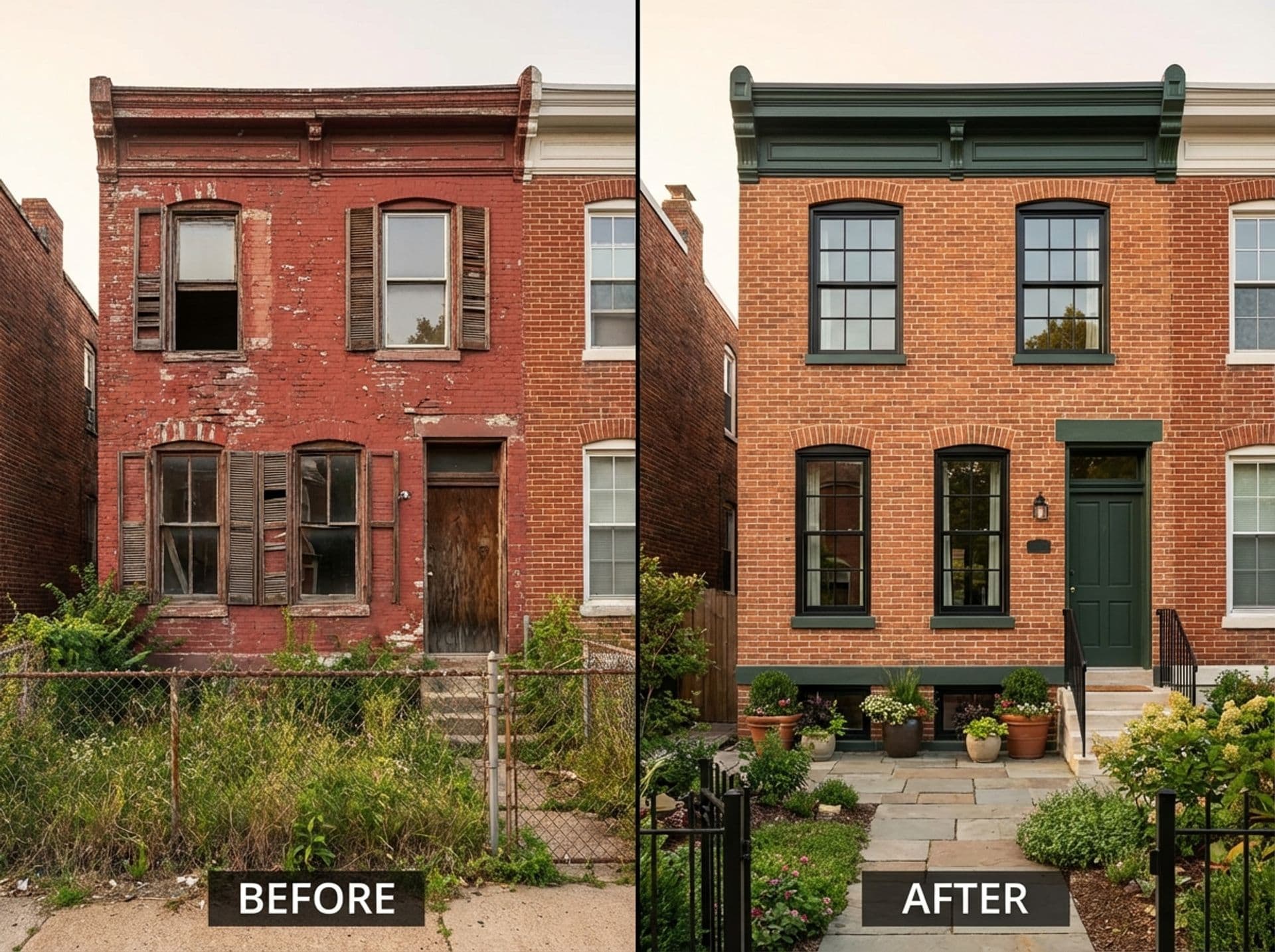
The buy phase is where most investors either win or lose. In Richmond, Church Hill North (north of Broad Street) still offers acquisition prices between $140,000 and $200,000 for rowhouses that need cosmetic to moderate rehab. Manchester, directly south of the James River, has seen rapid development, but side streets still hold duplexes and singles in the $160,000-$220,000 range. Scott's Addition is largely built out for new construction, but adjacent areas like The Fan's western edge and Randolph offer similar walkability at lower price points.
Your purchase price needs to land at 65-75% of the projected after-repair value (ARV). In practice, that means targeting properties listed between $130,000 and $200,000 in neighborhoods where comparable renovated homes sell for $240,000-$300,000. MLS deals exist, but the best BRRR acquisitions in Richmond come from off-market sources — driving for dollars in Church Hill, direct mail campaigns in Manchester zip codes (23224, 23225), and wholesaler relationships.
Run your numbers before you make an offer. A reliable formula for Richmond: Purchase Price + Rehab Costs should not exceed 75% of ARV. If the math does not work at your offer price, walk away. There will always be another deal in this market.
Step 2: Rehab — Budgeting and Executing in Richmond
Rehab costs in Richmond typically fall between $25,000 and $40,000 for a standard BRRR-grade renovation on a 1,200-1,600 square foot home. That budget covers updated kitchens ($8,000-$12,000), bathroom refreshes ($4,000-$6,000 each), new LVP flooring throughout ($3,500-$5,000), fresh paint ($2,500-$3,500), and basic systems updates. If you are touching HVAC, electrical panels, or full plumbing replacements, budget $45,000-$60,000 and adjust your purchase price accordingly.
Richmond's permitting process through the Department of Planning and Development Review can add 2-4 weeks for structural or systems work. Church Hill properties in the historic district (Old and Historic Richmond) require additional review from the Commission of Architectural Review (CAR) for any exterior changes — that includes windows, siding, and roofing materials. Factor this into your timeline. A typical BRRR rehab in a non-historic area takes 6-10 weeks; in a CAR-regulated zone, plan for 10-14 weeks.
Build a reliable contractor bench before you close on your first deal. Richmond's investor-friendly contractors are busy, and the good ones book out 4-6 weeks. Get three bids, check references with other local investors (our GRIDx meetups are a great source), and always hold a 10% contingency on top of your contractor's bid.
Step 3: Rent — Maximizing Cash Flow
Richmond rental rates have climbed steadily, with average rents for a renovated 3-bedroom home running $1,400-$1,650 in Church Hill, $1,500-$1,800 in Manchester, and $1,350-$1,550 in Lakeside. For your BRRR to cash flow after the refinance, you need monthly rent to cover your mortgage payment (principal, interest, taxes, insurance), property management (8-10% if you outsource), maintenance reserves (5-8%), and vacancy reserves (5-7%).
Tenant quality matters more than maximizing rent. Screen thoroughly — verify income at 3x rent, check landlord references for the past two years, and run credit and background checks. Richmond's landlord-tenant laws under the Virginia Residential Landlord and Tenant Act (VRLTA) are relatively balanced, but evictions still take 30-60 days through General District Court. A bad tenant can wipe out a full year of cash flow.
Consider furnished or mid-term rental strategies for properties near VCU Medical Center or the downtown corridor. Travel nurses and visiting medical professionals will pay $1,800-$2,400/month for a furnished 2-bedroom, significantly above long-term rental rates. This hybrid approach can accelerate your portfolio growth.
Steps 4 & 5: Refinance and Repeat
The refinance is where you pull your capital back out to deploy on the next deal. Most DSCR lenders require a 6-month seasoning period after purchase before they will lend against the new appraised value. Some portfolio lenders in the Richmond market — including several that attend our GRIDx investor meetups — will do a cash-out refinance at 3-4 months if you can demonstrate the property is stabilized with a lease in place.
Target a 75% LTV cash-out refinance on the new appraised value. On a property you bought for $165,000, put $35,000 into rehab (total basis: $200,000), and that now appraises at $270,000, a 75% LTV refinance gives you a new loan of $202,500 — enough to recover your entire initial investment plus closing costs. Your monthly payment on that loan at a 7.25% rate would be approximately $1,381, which a $1,600/month rent comfortably covers after expenses.
The repeat phase is simply discipline. Once you have your capital back, resist the temptation to upgrade your lifestyle. Deploy that money into the next acquisition within 60-90 days. At a pace of 2-3 BRRRs per year, you can build a 10-unit portfolio within 3-4 years — each property generating $150-$300/month in net cash flow. That is the wealth-building engine that the BRRR strategy delivers in a market like Richmond.
Read Next
Continue exploring our education library
Explore More
Browse the full Education Hub or check out upcoming live training events at the branch.