
Creative Financing: How Richmond Investors Fund Deals Without 20% Down
Practical creative financing strategies for Richmond real estate investors including seller financing, subject-to deals, DSCR loans, hard money, and house hacking.
The Capital Problem Every New Investor Faces
The biggest barrier to building an investment portfolio is not finding deals — it is funding them. A conventional investment property loan requires 20-25% down, 6 months of reserves, and strong personal income documentation. For a $220,000 property in Manchester or Church Hill, that means $44,000-$55,000 in cash before closing costs. Most aspiring investors, especially agents who earn variable commission income, cannot stack that kind of capital repeatedly.
Creative financing solves this by restructuring how you acquire properties. Instead of going to a bank with a large down payment, you use seller motivation, existing loan terms, specialized lending products, or your own housing situation to reduce or eliminate the upfront capital requirement. These are not theoretical strategies — Richmond investors use them every month to acquire properties that would otherwise be out of reach.
Every strategy here is legal and ethical when executed properly. Some require more negotiation skill than others. All of them require that you understand the mechanics deeply enough to explain them to sellers, lenders, and closing attorneys. Half-knowledge is dangerous in creative financing.
Seller Financing: Buying Directly From the Owner
Seller financing means the property owner acts as the bank. Instead of getting a mortgage from a lender, you make monthly payments directly to the seller under terms you negotiate. In Richmond, this works best with older landlords who own properties free and clear, tired landlords who want out of management but do not need a lump sum, and estate situations where heirs want income rather than the hassle of selling on the open market.
A typical seller-financed deal in Richmond might look like this: purchase price of $185,000 on a duplex in Northside, $10,000 down (5.4%), 6% interest rate, 30-year amortization with a 5-year balloon. Your monthly payment would be approximately $1,049 on the $175,000 balance. If the duplex rents for $1,650 total ($825/unit), you are cash-flowing from day one with minimal capital deployed. When the balloon comes due, you refinance into a conventional or DSCR loan based on the property's appreciated value.
Finding seller financing candidates requires direct outreach. Pull lists of properties owned by individuals (not LLCs) for 10+ years with no mortgage of record in Richmond's assessment records. These owners are your best prospects. Our GRIDx members share direct mail templates and skip-tracing tools that have generated consistent deal flow.
Subject-To and DSCR Loans

A subject-to acquisition means you take ownership of the property while the existing mortgage stays in the seller's name. You make the payments on their loan, but you hold title. This works when a seller has a low-interest-rate mortgage (anything under 4.5% from the 2020-2021 era is gold) and needs to sell quickly — perhaps due to relocation, divorce, or financial distress. In Richmond, military families transferring from Fort Gregg-Adams are a common source of subject-to opportunities.
The primary risk is the due-on-sale clause. Technically, the lender can call the loan due when ownership transfers. In practice, lenders rarely exercise this clause as long as payments are made on time. However, you must disclose the risk to sellers and work with a real estate attorney who understands the structure. Virginia's settlement process requires an attorney at closing, which actually protects both parties in creative deals.
DSCR (Debt Service Coverage Ratio) loans are the most accessible institutional product for investors. These loans qualify based on the property's rental income rather than your personal income — which is transformative for agents with variable W-2s. Richmond DSCR lenders typically require a 1.15-1.25 DSCR (meaning rent must exceed the mortgage payment by 15-25%), 15-20% down, and credit scores above 680. Rates run 1-2% above conventional, but the ability to scale without income documentation limits is worth the premium.
Hard Money and Private Lending
Hard money lenders fund based on the property's value and your rehab plan, not your personal financial profile. In the Richmond market, hard money rates typically run 10-13% with 2-3 points (origination fees equal to 2-3% of the loan amount). These loans are short-term — 6 to 12 months — designed to bridge the gap between acquisition and permanent financing.
Hard money makes sense for BRRR deals and fix-and-flips where speed matters. If a wholesaler brings you a Church Hill rowhouse at $140,000 that needs $30,000 in work and will appraise at $240,000, a hard money lender can fund 80-90% of the purchase and 100% of the rehab within 7-10 days. Try getting a bank to close that fast. The interest cost over a 6-month hold is roughly $8,000-$10,000 — a cost of doing business that your equity spread easily absorbs.
Private lending is the next evolution. Once you have a track record of 2-3 successful deals, approach individuals in your network — other agents, business owners, retirees with IRA funds — and offer 8-10% returns secured by real property. A private lender earns better returns than a savings account or bond fund, and you get cheaper capital than hard money. Several Richmond GRIDx members fund each other's deals through self-directed IRA partnerships.
House Hacking: Your First Investment With 3.5% Down
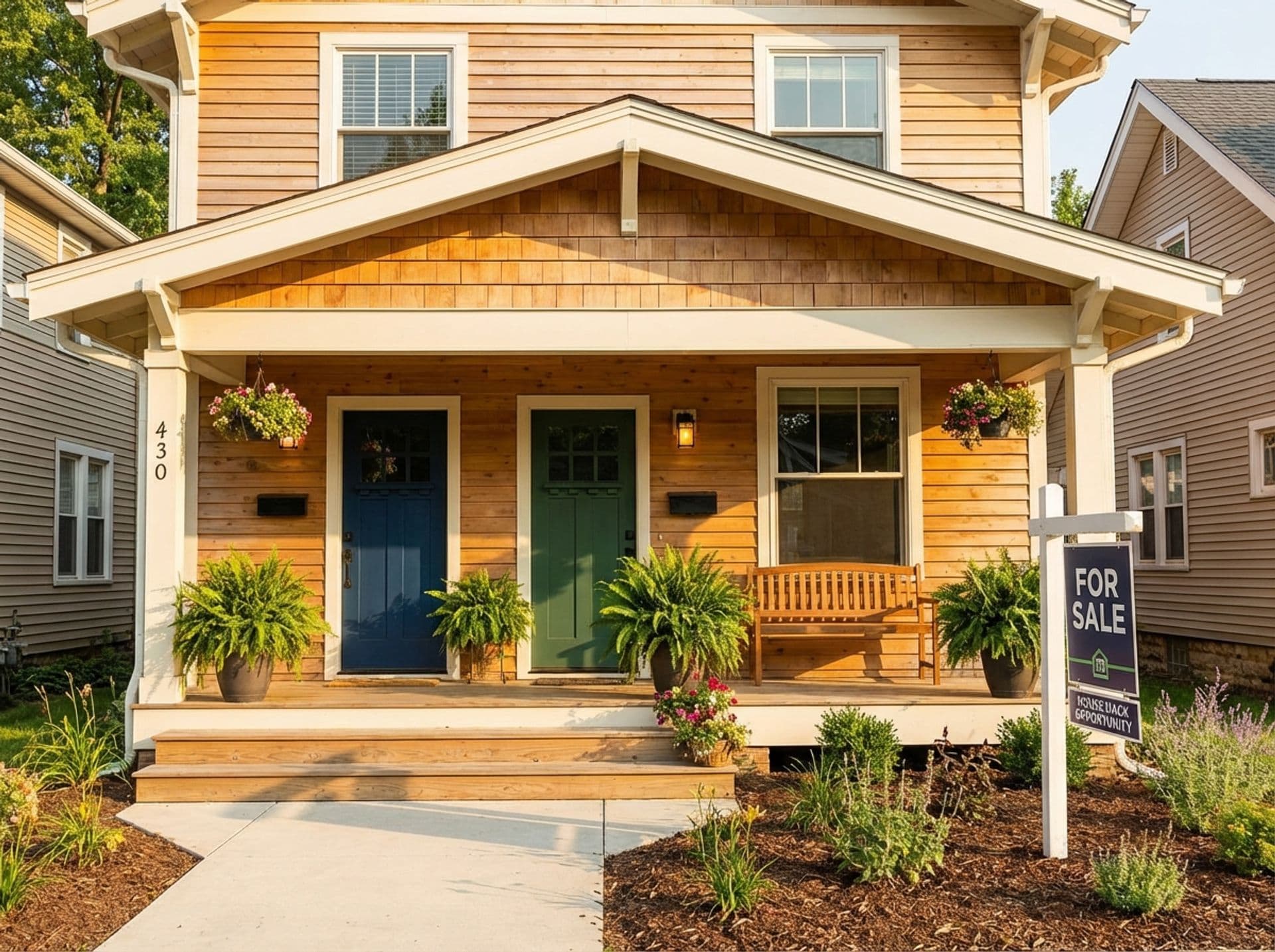
House hacking is the most accessible entry point for new investors, and it is how many of our eXp Richmond agents acquired their first investment property. The concept is simple: buy a 2-4 unit property as your primary residence using an FHA loan (3.5% down) or a VA loan (0% down if you are a veteran), live in one unit, and rent out the others. Your tenants cover most or all of your mortgage, and you build equity while paying minimal housing costs.
Richmond has strong house-hacking opportunities in neighborhoods with existing multi-family stock. The Fan District, Museum District, and Jackson Ward have duplexes and triplexes in the $275,000-$400,000 range. A $300,000 duplex with an FHA loan requires approximately $10,500 down plus closing costs. If your unit's share of the mortgage is $1,100/month and the other unit rents for $1,350, your effective housing cost drops to near zero — and you are now a real estate investor.
After 12 months of owner-occupancy (the FHA requirement), you can move out, convert the property to a full rental, and repeat the process with another FHA or conventional owner-occupied loan. Some agents on our team have acquired 3-4 properties in 5 years using this sequential house-hacking approach. It requires patience and willingness to live in your investment, but the capital efficiency is unmatched.
Read Next
Continue exploring our education library
Explore More
Browse the full Education Hub or check out upcoming live training events at the branch.