
Richmond's Top 5 Neighborhoods for Real Estate Investment in 2026
A data-driven analysis of the five Richmond VA neighborhoods offering the best investment potential in 2026, from historic Church Hill to the growing Midlothian Corridor.
How We Evaluate Investment Neighborhoods
Not all appreciation is created equal, and chasing last year's hot neighborhood is a reliable way to overpay. When our GRIDx investor network evaluates Richmond neighborhoods, we look at five factors: current price-to-rent ratios (lower is better for cash flow), infrastructure investment (city and private capital flowing into the area), population and employment trends (who is moving in and why), housing stock characteristics (age, condition, renovation potential), and proximity to demand drivers (universities, hospitals, military installations, employment centers).
The neighborhoods on this list are not secrets — experienced Richmond investors already know them. What we provide is the analytical framework for timing your entry, selecting the right property type, and understanding the specific dynamics driving each area's growth. A neighborhood can be "good" in general but terrible for your specific strategy if the numbers do not align.
1. Church Hill: The Historic Restoration Boom
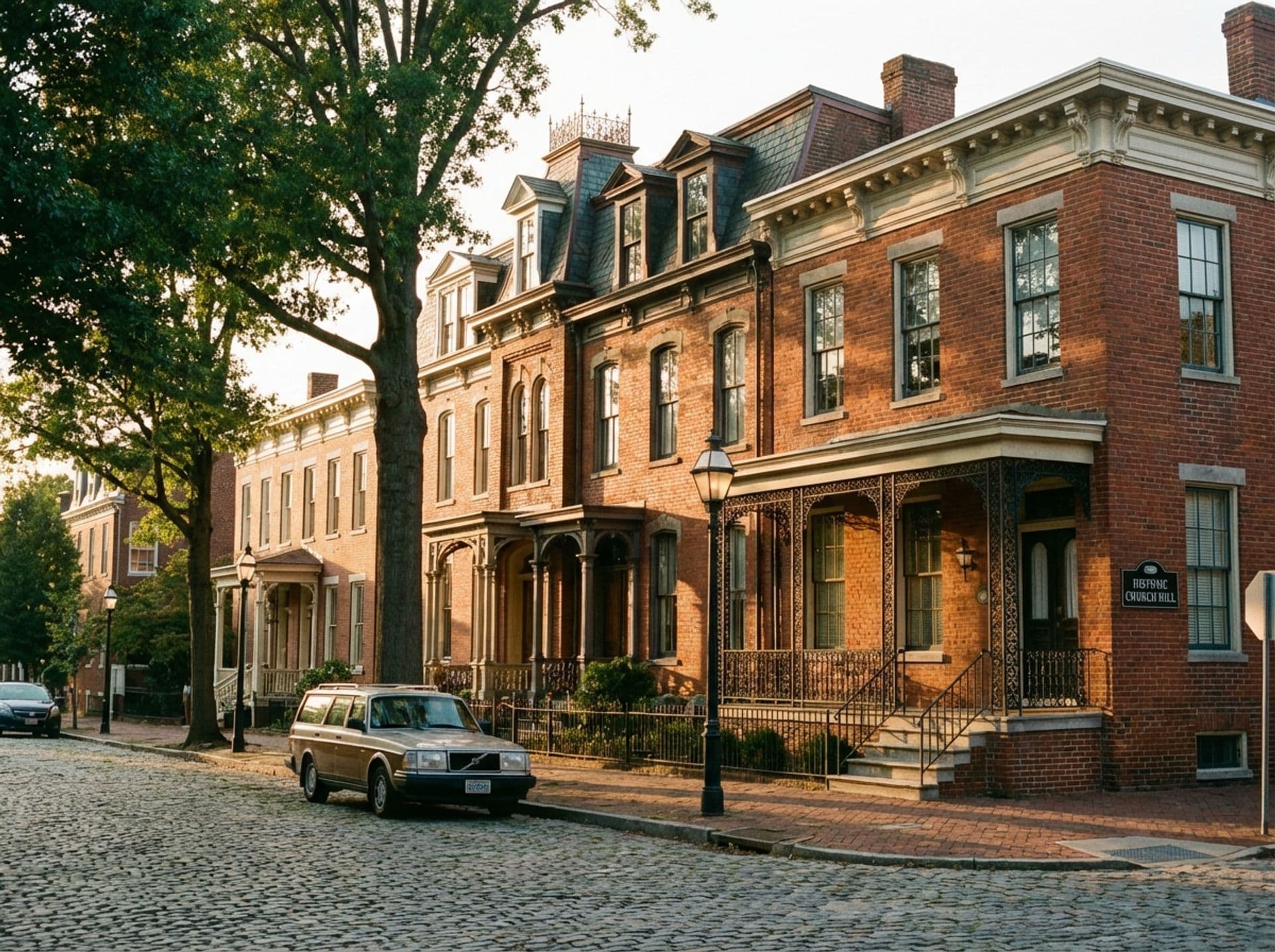
Church Hill remains Richmond's most compelling investment story, though the opportunity has shifted. The southern portion (Church Hill South, bounded roughly by Broad Street, 21st Street, and the river bluff) has largely gentrified — renovated homes trade at $300,000-$450,000, and the days of buying distressed rowhouses for under $100,000 are gone. The opportunity now is in Church Hill North, where blocks vary dramatically from fully renovated to deeply distressed, often within a few hundred yards of each other.
Church Hill North properties in the $140,000-$200,000 range still offer strong BRRR potential, with post-rehab values of $250,000-$310,000 depending on the block and finish level. The area benefits from spillover demand as Church Hill South prices push buyers northward, plus ongoing city investment in the Nine Mile Road corridor. Rental demand is strong from VCU students and young professionals who want walkability to Shockoe Bottom but cannot afford The Fan.
The risk in Church Hill North is block-by-block variability. Two streets apart can mean the difference between a solid rental and a property that struggles with tenant quality and maintenance. Work with an agent who invests in the area — not one who simply sells there — and walk every block before you commit capital.
2. Manchester: Riverfront Transformation
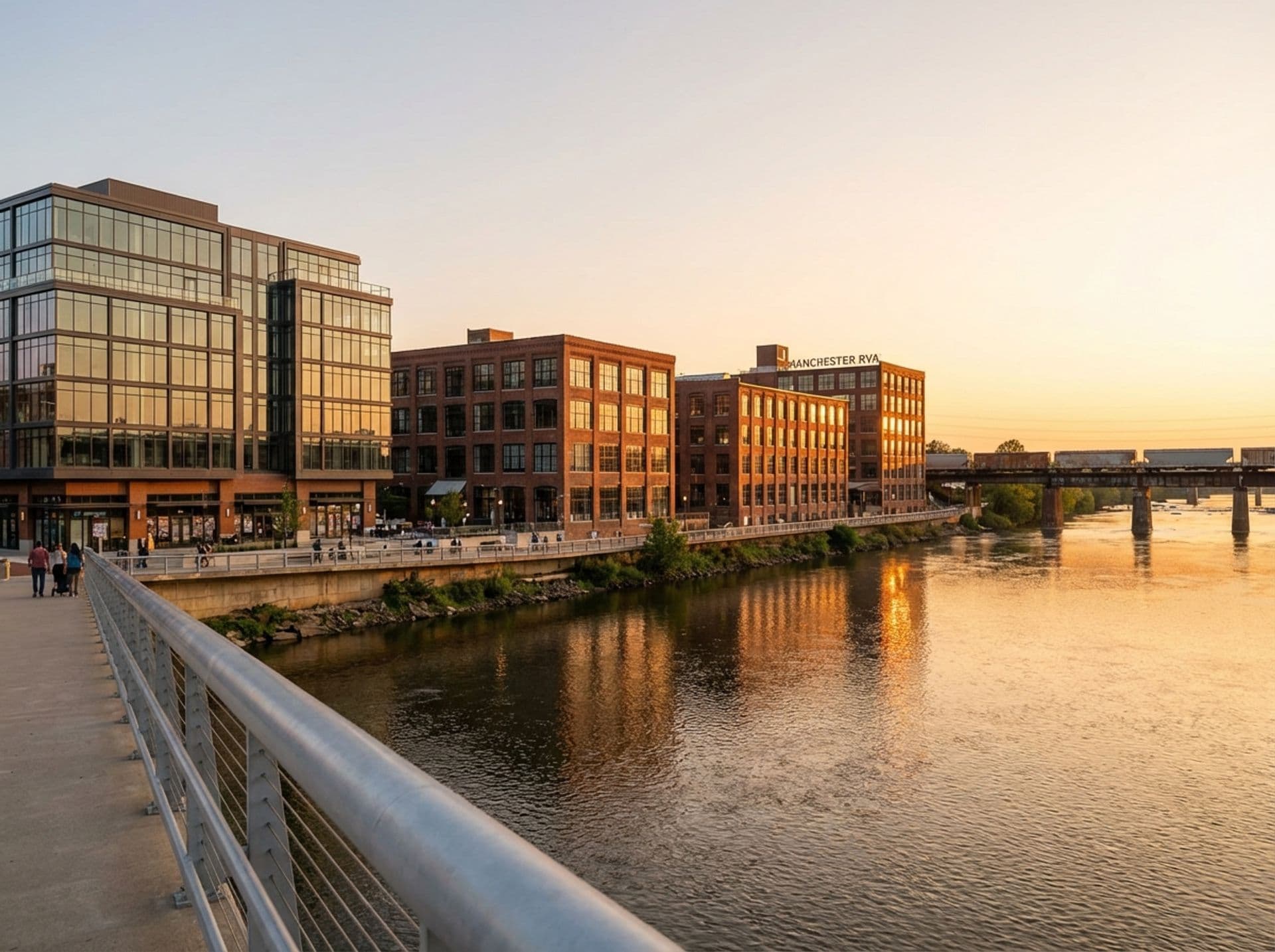
Manchester has undergone the most dramatic transformation of any Richmond neighborhood in the past decade. The former industrial district south of the James River has added thousands of apartment units, restaurants, breweries, and retail along Hull Street and the riverfront. Property values for renovated homes have climbed to $280,000-$380,000, and the area now competes directly with Shockoe Bottom and The Fan for young professional tenants.
Investment opportunities in Manchester exist primarily in the side streets south of Hull, where original worker cottages and small multi-family buildings trade in the $180,000-$250,000 range. These properties benefit from proximity to the new development without carrying the premium price tags. Duplex conversions are particularly strong here — a single-family cottage converted to a legal duplex (Richmond's zoning allows this in many Manchester blocks) can generate $2,400-$3,000/month in combined rent.
The Manchester Bridge replacement project and continued riverfront trail development will sustain demand through 2026-2028. Watch for the planned grocery store and additional retail on Semmes Avenue — each commercial anchor added to the neighborhood reduces tenant turnover and supports rent growth.
3. Scott's Addition and 4. Lakeside: Urban Cool Meets Affordable Entry
Scott's Addition has transformed from a light-industrial backwater to Richmond's entertainment district, home to over a dozen breweries, restaurants, and entertainment venues. For investors, the play is no longer single-family homes (very few exist in the neighborhood) but small commercial properties and live-work spaces. If your strategy involves short-term rentals or Airbnb arbitrage, Scott's Addition consistently ranks as Richmond's highest-performing STR market, with nightly rates of $150-$250 for well-furnished units.
Lakeside, the Henrico County neighborhood straddling Lakeside Avenue north of Bryan Park, offers what Church Hill provided ten years ago: affordable entry points with clear upward trajectory. Single-family homes in Lakeside trade at $190,000-$260,000, well below comparable properties in The Fan or Museum District that share similar mid-century housing stock. Rents of $1,300-$1,600 for 3-bedroom homes deliver solid cash-on-cash returns, and the area's proximity to I-95, Bryan Park, and the Lewis Ginter Botanical Garden sustains tenant demand.
Lakeside's advantage is its school district appeal within Henrico County — a factor that attracts long-term tenants (families) rather than transient renters. Long-term tenants mean lower turnover, fewer vacancies, and more predictable cash flow. For buy-and-hold investors, this stability outweighs the higher appreciation potential of trendier neighborhoods.
5. Midlothian Corridor: Suburban Growth Engine
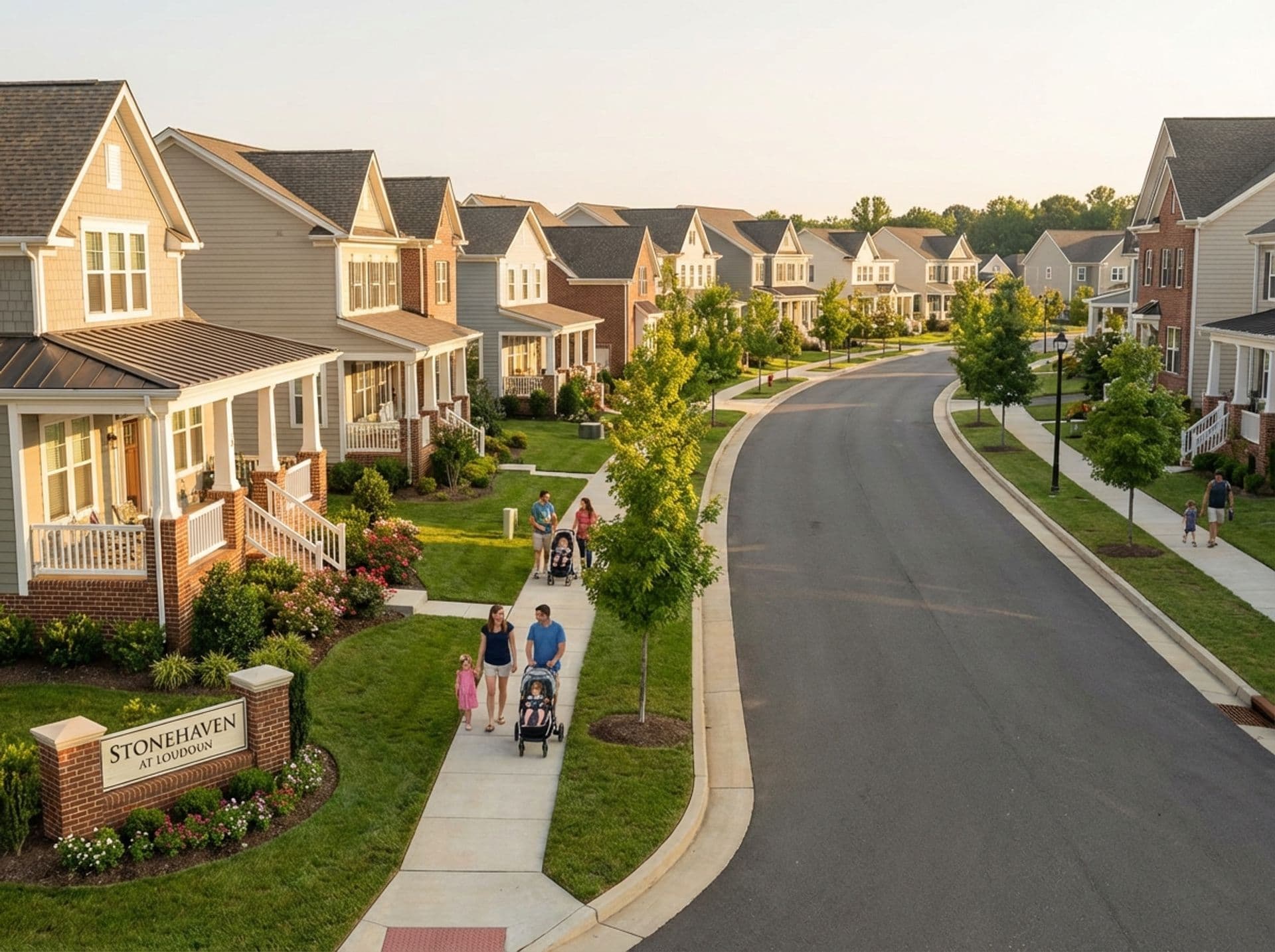
The Midlothian Turnpike corridor stretching from Bon Air through Midlothian proper into western Chesterfield County represents a different investment thesis than the urban neighborhoods above. This is a growth play, not a value-add play. New construction, expanding retail centers, top-rated Chesterfield County schools, and proximity to Chippenham Parkway and Powhite Parkway make Midlothian a magnet for families and corporate relocators.
Investment properties along the corridor range from $280,000-$380,000 for single-family homes in established subdivisions to $350,000-$450,000 for newer construction. Cash-on-cash returns are lower than urban Richmond (typically 5-7% versus 8-12%), but appreciation has been consistent at 4-6% annually, and tenant quality is exceptionally high. These are families with stable employment, good credit, and long lease durations.
The best Midlothian investment strategy for agents on our team is to target homes in the $300,000-$340,000 range in subdivisions built between 2005-2015. These properties require minimal maintenance, attract qualified tenants within days of listing, and appreciate reliably. It is not exciting, but it builds wealth — and it pairs well with a portfolio that includes higher-yield urban properties for cash flow diversification.
Read Next
Continue exploring our education library
Explore More
Browse the full Education Hub or check out upcoming live training events at the branch.